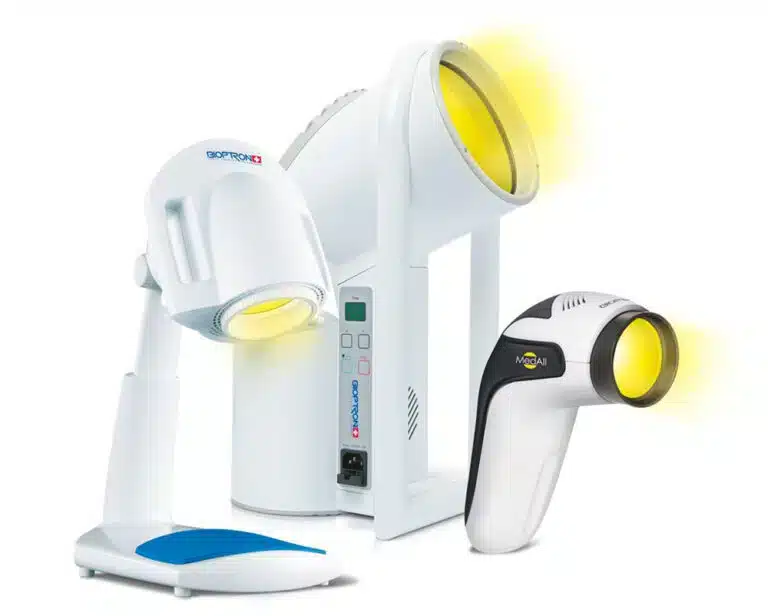
Phototherapy, as a minimally invasive, safe, and effective method, has increasingly gained attention in various medical fields such as wound healing, inflammation reduction, and pain relief. One of the devices widely used in this domain is the Bioptron device. This device utilizes polarized, polychromatic (multi-wavelength), and non-coherent light, which provides unique properties for stimulating biological processes.
In the following, we will examine the mechanism of action of Bioptron, scientific evidence (clinical and experimental) regarding its applications in treating inflammation, wounds, and pain, its advantages, limitations, and recommendations for clinical use.

Physical Principles and Mechanism of Action of Bioptron
Characteristics of Bioptron Light
- The Bioptron device emits light with a wavelength range of approximately 480–3400 nm.
- The light is polarized, polychromatic, and non-coherent.
- The device’s power density is typically around 40 mW/cm² at a specified distance from the skin.
Biological Mechanisms
The biological effects of Bioptron light on tissues can be explained through several main pathways:
Cell Activation and Metabolism: Bioptron light can stimulate cellular metabolism, particularly in cells such as fibroblasts, endothelial cells, and macrophages. This stimulation may increase the synthesis of growth factors, matrix metalloproteinases, and collagen.
Immune and Inflammatory Modulation: One of the major strengths of Bioptron is its effect on the immune and inflammatory systems. Studies have shown that polarized light exposure can regulate the production of cytokines such as IL-1, IL-6, IL-8, and TNF-α.
In fact, an initial inflammatory reaction (increased production of oxygen radicals and cytokines) may occur, but over time, the immune response shifts toward reparative/anti-inflammatory pathways.
Improved Blood Circulation and Angiogenesis: Bioptron light can improve local microcirculation through enhanced angiogenesis and increased vascular permeability, facilitating tissue repair.
Pain Reduction: Pain reduction may occur through several pathways: stimulation of peripheral nerve terminals, decreased muscle spasm, reduced local inflammation, and activation of analgesic or immune-mediated anti-pain signaling pathways.
Accelerated Tissue Repair / Collagen Production: A key mechanism in wound healing is the stimulation of fibroblasts to produce collagen. Bioptron can promote collagen growth and better alignment within the extracellular matrix, supporting more uniform tissue repair with less scarring.
Clinical Applications of Bioptron
Inflammation Treatment
Inflammation is one of the body’s initial responses to injury, infection, or irritation. However, chronic or excessive inflammation can lead to tissue damage, chronic pain, and delayed wound healing. Bioptron can be effective in this area:
- The system is useful in treating inflammatory mucosal diseases (such as those in the mouth, nose, and eyes), and clinical results demonstrate its anti-inflammatory effects in two phases (initial cytokine stimulation followed by reparative/anti-inflammatory action).
- In surgeries and postoperative aesthetic or reconstructive procedures, Bioptron light can reduce postoperative inflammation, improve microcirculation, and aid tissue regeneration.
- In a clinical study on peri-implant mucositis, Bioptron combined with standard care resulted in faster improvement in inflammatory parameters.
These findings suggest that Bioptron can act as an adjunctive therapy in managing localized inflammation without causing major side effects.
Wound Healing
One of the most significant applications of Bioptron is in wound healing, both in acute wounds (e.g., postoperative or burn wounds) and chronic wounds (e.g., diabetic ulcers and pressure ulcers).
Clinical Evidence
In a controlled trial on diabetic foot ulcers (DFU), 40 type 2 diabetic patients with grade 1–2 wounds (Wagner scale) were divided into two groups: Bioptron + standard wound care and standard care alone. After 8 weeks, the Bioptron group showed significantly greater reduction in wound size (~51.44% vs. ~24.5% in the control group). The number of patients with negative microbial cultures was also higher in the Bioptron group.
A case report on acute lateral elbow tendinopathy showed a marked reduction in pain (VAS scale) and improved function after Bioptron therapy.
In a clinical study on skin graft repair, graft sites treated with Bioptron showed faster epithelialization and better initial scar quality compared with controls.
Case studies on pressure ulcers showed significant wound size reduction after several Bioptron sessions, with some cases improving substantially after just 10 sessions.
In burn patients, Bioptron exposure was associated with reduced epithelialization time and improved post-repair skin quality.
Clinical Benefits in Wound Healing
- Faster healing: Due to fibroblast activation and improved angiogenesis.
- Reduced scarring: Through improved collagen alignment and better extracellular matrix organization.
- Reduced infection: The diabetic foot study showed decreased microbial load and higher negative culture rates in the Bioptron group.
- High safety: Since Bioptron uses light without UV (or minimal harmful UV), the risk of harmful radiation is lower than in other light-based therapies.
Pain Reduction
Pain reduction is one of the most important clinical uses of Bioptron, especially in sports injuries, inflammatory conditions, or postoperative pain.
Mechanisms of Pain Relief
- Stimulation of peripheral nerve endings modifies membrane potential or inhibits pain signal transmission.
- Reduced inflammation and improved blood flow decrease local pressure and nerve irritation.
- Activation of reparative/immune pathways promotes endogenous anti-pain factors.
Advantages and Limitations
Advantages
- Non-invasive: No need for incisions, injections, or surgical procedures.
- High safety: Light is designed without harmful UV radiation.
- Wide applications: From inflammation and sports injuries to diabetic ulcers, pressure ulcers, and burns.
- Adjunct to standard treatments: Often enhances the results of wound care or physiotherapy when used alongside standard therapies.
- Improved tissue quality: Better collagen organization leads to improved healing and reduced scarring.
- Clinic and home use: Some Bioptron models are designed for home application, enabling continued therapy.
Limitations and Risks
Need for repeated sessions: Optimal results require multiple treatment sessions over several weeks.
Lack of full standardization: Best parameters (distance, duration, number of sessions) are not yet universally defined.
Limited high-quality trials in some areas: Certain applications still lack large-scale randomized controlled trials (RCTs).
Cost and accessibility: The device can be expensive and may not be accessible to all patients.
Precautions: Some conditions (photosensitivity, specific skin disorders) may require caution.
Recommendations for Clinical Use
Patient Evaluation
- Precise wound classification (acute/chronic, infected/non-infected).
- Review of medical history (diabetes, circulatory issues, immune problems).
Designing an Effective Treatment Protocol
- Determine number of sessions, duration, device distance, and frequency (daily or several times weekly).
- Use parameters proven successful in clinical studies.
- Monitor healing progress, pain levels, and possible side effects regularly.
Use as an Adjunct Therapy
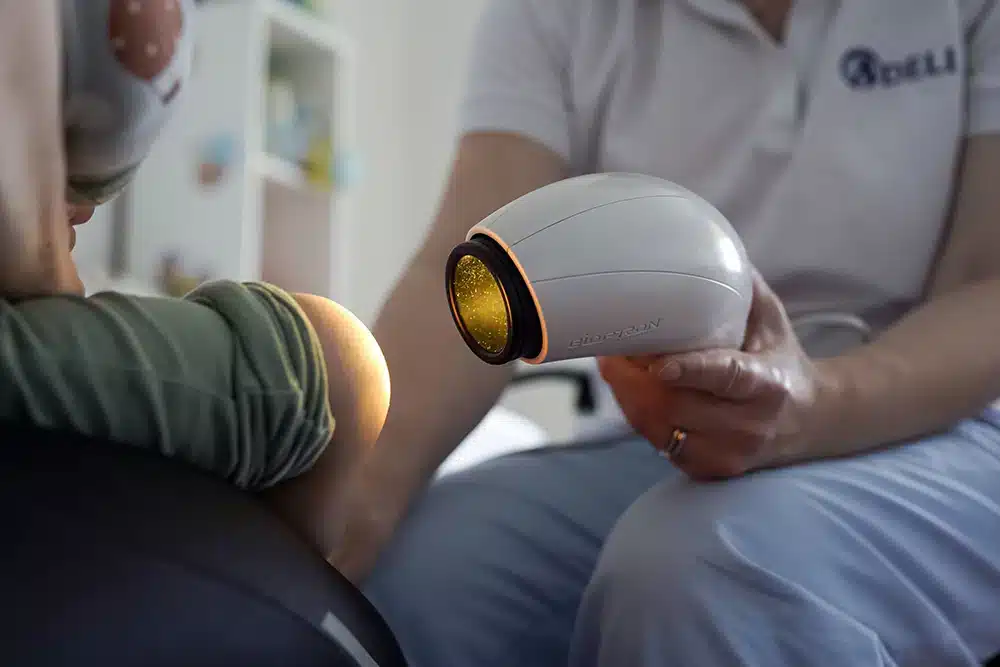
Bioptron is usually used as an adjunct alongside standard wound care (dressing, disinfection, medication). In physiotherapy, Bioptron can be used along with other methods such as massage, movement exercises, cold, or heat.
Follow-Up and Outcome Assessment
- Measuring objective indicators such as wound area, wound volume, microbiological culture results, pain index (such as VAS)پ
- Recording treatment outcomes over time to evaluate effectiveness and adjust the protocol if needed
Challenges and Future Outlook
Despite positive evidence, several challenges exist for expanding the use of Bioptron:
More research and larger studies: A need for randomized controlled trials (RCTs) with larger sample sizes and more precise control of irradiation parameters, in order to standardize protocols and determine the most effective treatment settings.
Deeper mechanistic studies: Although primary mechanisms have been identified, a more detailed understanding of the molecular, genetic, and cellular signaling effects caused by Bioptron light can lead to optimization of therapy.
Combination with other methods: Further research on combining Bioptron with other rehabilitation techniques (such as cell therapy, modern physiotherapy, regenerative drugs) may reveal synergistic effects.
Increasing accessibility and cost reduction: Producing more affordable devices, designing home-use models, and insurance coverage may expand the use of Bioptron.
Clinical education and awareness: Increasing awareness among physicians, nurses, physiotherapists, and patients about the benefits and limitations of Bioptron to enhance clinical acceptance.
Conclusion
The Bioptron device, with polarized, polychromatic, and non-coherent light, is a powerful tool in treating inflammation, wounds, and pain. Clinical and experimental scientific evidence indicates that this method can:
- Reduce local inflammation
- Increase the speed of wound healing (including diabetic wounds, pressure ulcers, skin grafts, and burns)
- Reduce wound microbial load
- Reduce pain in acute and chronic injuries.
Advantages of Bioptron include high safety, non-invasive application, compatibility with other treatments, and improved healing quality. However, it also has limitations, such as the need for multiple sessions, device cost, and lack of full standardization of irradiation parameters.
For successful clinical use, proper protocol design, regular assessment, patient training, and close monitoring are essential. With advancing research, Bioptron may become an integral part of regenerative treatment strategies.
Further Reading:
Comprehensive guide to choosing breast implant size
Breast Shaping with Fat or Implants: Which Method is Better?