Breast ptosis is one of the common changes following pregnancy, breastfeeding, and significant weight loss. Many women wish to restore the shape and position of their breasts after these changes and often face a choice between two main options: breast lift (Mastopexy) and lift combined with implants (Mastopexy-Augmentation).

Also, see the article comparing the outcomes of reduction mammaplasty and breast lift (Mastopexy).
Why Does Breast Sagging Occur?
The main causes of breast sagging can be categorized as follows:
- Hormonal changes during pregnancy and breastfeeding: During pregnancy, the glandular tissue and breast volume increase, and after breastfeeding ends, a significant portion of this volume may be lost; the stretched skin may not return to its original state.
- Significant weight loss: Loss of body fat reduces breast volume, but excess skin often remains.
- Aging and weakening/stretching of ligaments: Over time, skin elasticity and ligament support decrease.
- Genetics: Skin quality, fat distribution, and tissue structure largely depend on genetic factors.
Understanding the cause of sagging helps determine the appropriate treatment: Is the problem mainly with the skin and nipple position, or with volume and breast fullness?
Classification of Ptosis
For clinical decision-making, surgeons typically use a simple classification based on the position of the nipple relative to the inframammary fold (IMF):
- Grade 1 (Mild): Nipple at or slightly below the IMF.
- Grade 2 (Moderate): Nipple below the IMF but above the lower breast edge.
- Grade 3 (Severe): Nipple significantly low, near or below the lower breast edge.
- Pseudoptosis: Nipple is in a proper position, but the lower breast hangs excessively; usually treated with Breast implants alone.
The success rate and choice of method depend on the severity of ptosis and the amount of breast tissue.
Breast Lift (Mastopexy): What It Does and Doesn’t Do
A breast lift is surgery to raise the nipple and remove excess skin. Mastopexy improves nipple position and overall breast shape but does not add new volume.
Typical outcomes of a lift:
- Improved nipple position
- Shaping and firming of the breast
- Reduction of excess skin and correction of sagging
Main limitation: If a patient has lost significant breast volume, a lift alone may result in a flat upper breast.
Implants (Prosthesis): When They Help
Breast implants are used to increase volume and fill the upper breast. In cases where breast volume has diminished after pregnancy or weight loss and the skin is loose, implants can create a fuller, rounder shape.
Common indications for implants:
- Significant volume loss after breastfeeding or weight reduction
- Patient dissatisfaction with current size and desire for larger breasts
- Pseudoptosis (implant alone may suffice)
- Low glandular tissue where results would be insufficient without an implant
Can Implants Be Used Without a Lift?
Short answer: It depends.
If the nipple is in the correct position and the only issue is volume loss (especially in the upper breast)—i.e., pseudoptosis—placing implants alone may be enough. However, if the nipple is low (true ptosis), placing implants without correcting nipple position often produces undesirable results: the nipple remains low, and the new volume may look disproportionate.
Combining Lift and Implant: Pros and Cons
Advantages:
- Corrects sagging while restoring or increasing volume
- Creates a rounder, more natural appearance
- Allows for more precise shaping and symmetry
Disadvantages:
- More complex surgery
- Requires an experienced surgeon to minimize risks
- May require revision surgery in some cases
In clinical practice, many experienced surgeons consider simultaneous lift and implant placement safe and effective when the size and technique are chosen appropriately.
Decision-Making Criteria: Surgeon Checklist
Surgeons typically evaluate:
- Amount and distribution of breast tissue: Is there enough glandular tissue?
- Degree of ptosis: Grade 1–3
- Skin quality and elasticity: Thin or thick skin?
- Patient expectations: Does the patient want a size increase or only position correction?
- Breast base width: Important for implant size selection
- Symmetry: Are there significant differences between the breasts?
- Age and future pregnancy plans: Future pregnancies can affect results
Clinical Scenarios and Decision Examples
Scenario 1 — Mild ptosis with adequate volume
A 32-year-old woman has mild ptosis after childbirth but feels her overall breast size is adequate. In this case, a lift alone is usually sufficient and provides a natural, satisfactory result.
Scenario 2 — Moderate to severe ptosis with volume loss
A 38-year-old woman with two pregnancies and a 15 kg weight loss has moderate to severe ptosis and significant volume loss. Lift combined with implants is recommended to achieve desired volume and raise the nipple.
Scenario 3 — Pseudoptosis
A woman has nipples in the correct position but hollow upper breasts. Here, an implant alone may be sufficient, and a lift may not be necessary.
Surgical Techniques and Incisions
Common incisions used in lift or lift+implant procedures:
- Periareolar incision: Suitable for mild ptosis and patients desiring minimal visible scarring
- Vertical/Le Jour incision: Around the areola with a vertical component, suitable for moderate ptosis
- Inverted-T/Anchor incision: For severe ptosis and extensive skin correction
Implant placement approaches: Subglandular, submuscular, or dual-plane. Each technique has pros and cons and is selected based on body shape, tissue thickness, and aesthetic goals.
Implant Selection Considerations
Key parameters for implant placement:
- Size and volume: Selected based on breast base width and body proportions for a natural result
- Shape: Round or anatomical (teardrop) for different appearances
- Material: Silicone or saline; silicone is most commonly used today
- Incision and placement site: Under muscle or under gland, via inframammary, periareolar, or axillary incision
Pre- and Post-Operative Care
Before surgery:
- Complete examination and pre-op imaging
- Adjustment or discontinuation of certain medications (e.g., blood thinners)
- Stop smoking 4–6 weeks prior
- Establish goals and success criteria with the patient
After surgery:
- Wear a medical bra as instructed (4–6 weeks minimum)
- Avoid heavy lifting and strenuous activities for a specified period
- Follow-up appointments to monitor healing and symmetry
- Adhere to medication and wound care instructions to prevent infection

Risks and Possible Complications
Common risks of cosmetic surgery include:
- Infection
- Bleeding or hematoma
- Changes in nipple sensation (temporary or rarely permanent)
- Scarring, which may require treatment
- Implant-specific risks: capsular contracture, rupture, or displacement
With an experienced surgeon and proper follow-up, complications are greatly minimized.
Frequently Asked Questions (FAQ)
- Can I breastfeed after a lift?
In many cases, breastfeeding is possible, but not guaranteed; surgical technique and incision type play a role.
- Are results permanent?
No cosmetic surgery is completely permanent; aging and weight changes may affect results, but lifts combined with implants generally last longer than lifts alone.
- How long until final results are visible?
Initial swelling decreases within weeks, but final breast shape may take 3–6 months or more to stabilize.
Summary and Final Recommendations
The choice between lift alone and lift+implant depends on ptosis severity, breast tissue amount, skin quality, and aesthetic goals:
- If breast volume is adequate and the problem is mild-to-moderate sagging, a lift alone may be sufficient.
- If significant volume loss has occurred or the patient desires increased size and upper breast fullness, lift combined with implants usually yields the best results.
- In cases of pseudoptosis, implants alone may suffice.
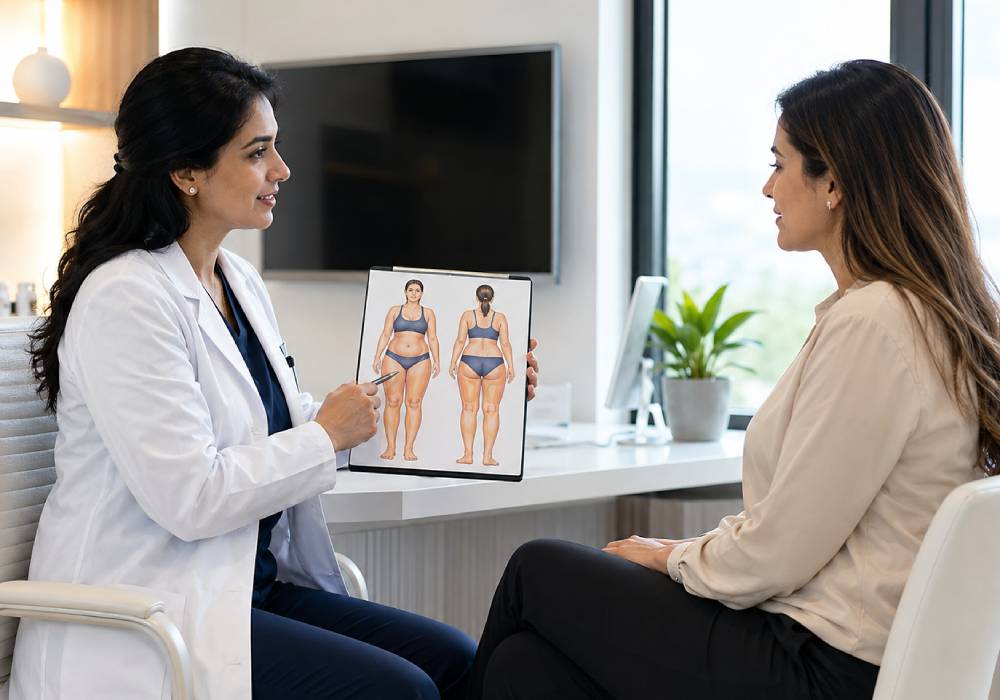
Consultation with an experienced plastic surgeon, discussing expectations, benefits, risks, and reviewing real patient examples, helps make the best decision.
Preparing for the Consultation
Surgeon/Consultation Checklist:
- Before and after photos
- Review pregnancy and breastfeeding history
- Assess recent weight changes
- Determine patient goals (lift, size increase, or both)
- Select incision technique based on skin type and ptosis
Further Reading:
The Effects of Mammoplasty on Nipple Sensation
Bioptron Hyperlight for Inflammation, Wounds & Pain
Mammoplasty to restore the natural shape of the breast after pregnancy or weight loss
Breast implant under the muscle or under the tissue which method is better?